


Translate Now: Translator App
3.82.44K Reviews
App Specs
- Version
- 4.9
- Updated On
- License
- Free
- Downloads
- 10,000,000+
- Developer
- DigiGen Apps
- Categories
- Business
- Platform
- Android
Screenshots

 Analysis by AppCompare
Have you ever been caught in a situation where you desperately needed to understand another language but didn’t have a clue what was going on? I’ve been there too, and that’s when I stumbled upon the Translate Now: Translator App. This little gem has been a lifesaver in various settings, from traveling abroad to just deciphering that quirky foreign recipe.
Getting Started with Translate Now
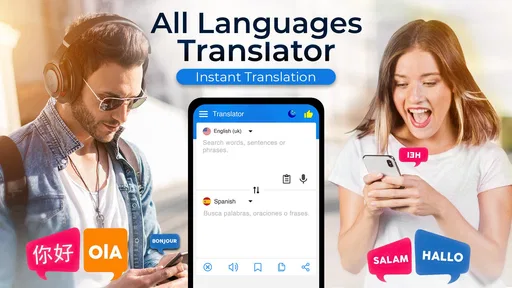
Diving into the Translate Now: Translator App is as straightforward as it gets. Once you download it, you're greeted with a clean, user-friendly interface. The design is intuitive, making it super easy even for those who aren't tech-savvy. You can quickly navigate through its features without scratching your head.
The app supports a wide range of languages, which is fantastic. Whether you’re trying to communicate in Spanish, Mandarin, or even Swahili, you’re covered. The initial setup allows you to select your preferred languages, and then you’re ready to roll!
Features That Make Life Easier
One of the coolest features is the camera translation. Say you’re staring at a menu in a Parisian café, and you’re not sure what "escargot" means. Just point your camera, and boom, instant translation! It’s like having a personal interpreter in your pocket.
The voice translation is another standout. Imagine chatting with someone in real-time without the awkward pauses. You simply speak into the app, and it translates your words into the other person’s language, and vice versa. This feature has made my interactions way smoother and less awkward.
There’s also a handy text translation feature, which is perfect for translating written documents or messages. Just type or paste the text, and the app does the rest. I’ve used it for everything from translating emails to understanding foreign news articles.
Performance and Reliability
When it comes to performance, the Translate Now app is pretty solid. It’s fast and responsive, which is crucial when you’re in the middle of a conversation. The translations are generally accurate, though it’s important to note that no app is perfect. Every now and then, you might get a quirky translation, but that’s rare.
Worth Reading Before You Choose

EA SPORTS FC Mobile 26 Is a Bigger Football Game, but It Takes Time

Flipboard Shows What News Apps Must Do Beyond the Feed

Switching to Android Auto Means Rethinking Your Driving Routine

Google Calendar Makes a Crowded Week Easier to Manage

Ludo King Makes the Most of the Minutes Between Plans

Baby Panda World Brings Quick Play to Modern Phones, but Its Game Library Feels Busy
The app requires an internet connection for the best results, especially for voice translations. However, it does offer offline translation for several languages, which is a lifesaver when you’re in a no-Wi-Fi zone. This feature has come in handy during my travels in remote areas.
User Experience and Interface
One thing I appreciate about the app is its minimalistic design. It’s not cluttered with ads, which can be a real pain in some free apps. The navigation is smooth, and the buttons are well-placed, making it easy to switch between features.
The app also offers customizations, like adjusting the speech speed or choosing different voices for translations. This flexibility adds a personal touch to your experience, making it more enjoyable to use.
Final Thoughts
All in all, the Translate Now: Translator App is a fantastic tool for anyone who needs a reliable translation app. Whether you're a frequent traveler, a language enthusiast, or just someone who occasionally needs to bridge the language gap, this app has got your back.
It’s not perfect, but it’s pretty close, and the developers seem committed to making continuous improvements. So, if you’re looking for a translation app that won’t let you down, give Translate Now a shot. You might just find it to be your new best friend when it comes to breaking down language barriers.
Ready to try it out? You can find it easily on the App Store or Google Play. Happy translating!
Where everyday use can snag
In practice, translation apps are most useful when the request is short and the context is clear. A menu item, a basic question, or a short message is easier to check than a long paragraph full of jokes, regional expressions, or technical terms. When Translate Now gives me an unexpected result, I treat it as a first draft rather than proof that I understood every nuance.
A useful habit is to translate a sentence in manageable pieces and preserve the surrounding context. For a message, include the sentence before or after the part that seems ambiguous; for a sign, check the heading and nearby labels as well as the key line. This can help reveal whether a word refers to a dish, a direction, or a warning. It also reduces the risk of acting on a fragment that sounds clear but means something different in context.
Voice translation has a different kind of friction: people speak quickly, interrupt themselves, or talk over traffic and background noise. I get better results by taking turns, keeping each statement brief, and saying names or numbers slowly. If a conversation matters, I ask the other person to confirm the translated meaning in their own words instead of assuming that a fluent-sounding result is exact.
Make the first try count
Before relying on the app while away from home, I would test the language pair and the kind of translation I plan to use. Try a sentence you already understand, compare the result, and learn where the text, voice, and camera options sit. This is more useful than discovering the controls for the first time while a queue is waiting behind you.
For a trip, it helps to prepare a small set of practical phrases in advance, such as asking where a station is or explaining a dietary restriction. Keep them short and direct. A translator can help communicate the request, but it should not be your only safeguard for medical instructions, legal documents, or other high-stakes decisions; have a qualified person check critical wording whenever possible.
The app is free to install, though it includes in-app purchases ranging from around fourteen dollars to around one hundred dollars per item. I would check what an offered purchase covers and whether it suits my actual routine before committing. If I only need occasional phrases, I would first see how far the free experience takes me rather than assuming a paid option is necessary.
A realistic travel workflow
Imagine arriving at a café and finding a menu you cannot read. I would use the camera option for a quick overview, then type a dish name or a question if the image result looked uncertain. For a dietary concern, I would keep the sentence specific, show the translated text to the staff member, and ask for confirmation. This combination is more dependable than pointing at a full page and trusting one broad translation.
Later, if I needed to ask for directions, I would switch to voice, speak one short question, and let the other person answer before speaking again. If the reply came through oddly, I would repeat the key place name or ask a simpler follow-up. The app can lower the barrier to starting an exchange, but it cannot guarantee that both people share the same context or that every spoken detail has been captured correctly.
For documents and long messages, I would use text translation in sections rather than paste a dense block and accept it all at once. Names, dates, amounts, and instructions deserve a separate check because a small mistake can change the practical meaning. When the source is something I must sign or follow precisely, a human review is the safer choice.
Choosing it over familiar alternatives
Translate Now sits in the business-oriented utility space, but its appeal is broader than office work: it brings text, voice, and document translation into one app for everyday needs. Compared with a basic dictionary, it is more convenient when I need a whole phrase or a quick exchange rather than a single word. A dictionary can still be better for studying vocabulary, checking definitions, or understanding how a term changes across contexts.
Compared with using a phone’s built-in translation tool, the practical question is whether this app’s particular combination of translation modes fits the way I work. If I already have a dependable option that handles my usual language pair and tasks, installing another app may add little. Translate Now makes more sense when I want one place to move between written material, speech, and a camera-based situation, while a specialist human translator remains the better option for sensitive or consequential content.
DigiGen Apps has built a free app with broad language coverage, and its 3.9 average from around ninety-four thousand ratings suggests a substantial audience with mixed experiences rather than universal approval. It has been installed over ten million times, is rated for Everyone, and its current version is 4.8. Those figures help set expectations about its reach, but they do not tell me whether a particular sentence in my language pair will be right, so I still check important results.
When troubleshooting should start elsewhere
If a translation seems wrong, I first check the source sentence: is it complete, clearly phrased, and in the language I intended? A typo, an unusual abbreviation, or a sentence that mixes languages can confuse any translator. I try a simpler version and compare the meaning rather than repeatedly submitting the same unclear wording.
If voice input struggles, I reduce background noise, pause between thoughts, and make sure only one person is speaking at a time. If camera text is hard to interpret, I steady the phone, improve the lighting, and frame only the relevant passage. These are general checks, not guarantees; a blurry image, stylized lettering, or noisy room can make recognition difficult before translation even begins.
Connection matters too. Since the app works best online, I would check that the phone has a usable internet connection before concluding that the translation service itself is at fault. Offline support is available for several languages, but I would not assume that every language or every translation mode works without a connection. If I know I will be without service, I test the specific language pair beforehand and keep an alternative plan for essential communication.
Who will get the most from it
I see the strongest fit for travelers, multilingual households, and people who occasionally receive messages or documents in languages they do not read. It is also useful for a small business owner who needs to understand a simple customer question or draft a basic reply, provided the exchange is not sensitive and the final wording is checked. The benefit is convenience: a single app can help with several kinds of language tasks without turning every small question into a search for a separate tool.
It is less suitable for someone who needs certified translation, dependable interpretation for medical care, or precise legal and financial wording. It is also not a replacement for learning a language: translations can help me get through a situation, but they do not explain grammar or reliably teach why one expression is more natural than another. A learner may be better served by a course or dictionary alongside a translator.
For parents or children, the Everyone content rating makes the app broadly appropriate by age classification, but I would still guide a child when translations affect safety, school instructions, or communication with strangers. The rating does not make a machine-generated answer authoritative. The same common-sense check applies to any user handling private or important material: consider whether the content is appropriate to enter into a translation app before pasting it.
My practical verdict
Translate Now is most convincing as a quick bridge, not a final authority. I would keep it handy for a menu, a short conversation, or a message that needs a first-pass translation, and I would switch to a dictionary, a built-in tool, or a human professional when the task calls for deeper explanation or exact wording. That distinction keeps the convenience without asking the app to do work it cannot promise to do.
If you are deciding whether to try it, start with the language pair and task you actually need, test them while you have a reliable connection, and check what any in-app purchase includes before paying. The free entry point makes it easy to explore, while the paid items mean it is worth being deliberate rather than tapping through an offer on impulse. For casual, practical translation across different formats, I think it is a useful option; for high-stakes communication, I would treat it as a helper and get a person to verify the result.
Pros
- Easy-to-use interface for quick translations.
- Supports multiple languages for versatility.
- Offline mode available for premium users.
- Voice translation feature is highly accurate.
- Text recognition from images works well.
Cons
- Free version has limited features.
- Contains ads that can be intrusive.
- Occasional lag with audio translations.
- Premium version is relatively expensive.
- Limited dialect options for some languages.
FAQs for Translate Now: Translator App
Is Translate Now: Translator App free to use?
Translate Now offers a free version with basic features, but it also has a premium subscription for users who want access to advanced options such as offline translation and unlimited voice translations. The free version is suitable for casual use, while the premium version is ideal for frequent travelers or those needing extensive translation services.
What languages does Translate Now support?
Translate Now supports a wide range of languages, offering translations for over 100 languages, including popular ones like Spanish, French, Chinese, and Arabic. This makes it a versatile tool for users around the world. The app continually updates its language offerings, ensuring up-to-date and accurate translations.
Can Translate Now be used offline?
Yes, Translate Now offers an offline mode, but this feature is only available to premium subscribers. The offline mode allows users to download specific language packs to their device, enabling translation without an internet connection. This is particularly useful for travelers in areas with limited connectivity.
How accurate are the translations provided by Translate Now?
Translate Now leverages advanced algorithms and AI to provide accurate translations, though like any machine translation, it may occasionally struggle with nuanced phrases or idiomatic expressions. The app is continuously improved to enhance accuracy, making it reliable for both everyday and business use.
Does Translate Now: Translator App have voice recognition features?
Yes, Translate Now includes a voice recognition feature that allows users to speak directly into the app and receive real-time translations. This is particularly beneficial for those who prefer speaking over typing. The voice recognition is generally accurate and supports multiple languages, making it convenient for quick conversations.


